Rock Cutting & Drilling Tools Manufacturer
peter@plasmahigh-tech.com

30-second summary:
Why Alloy Ring tools last longer.

The Problem

Standard picks have a brittle hardness interface that cracks under impact — causing premature wear and unplanned downtime.

The Solution

Alloy Ring Technology creates a smooth hardness transition — hard surface, tough core, no brittle boundary to crack.

The Result

Longer life, fewer changeouts, lower cost per tonne.

Request Quote Read Full Analysis ↓
The Engineering Problem

Five failure modes of cutting picks.

Observed failure modes of cutting picks in the field — from normal wear to carbide loss and uneven wear. Causes: ground-condition mismatch, excessive impact, material properties, or mounting geometry.
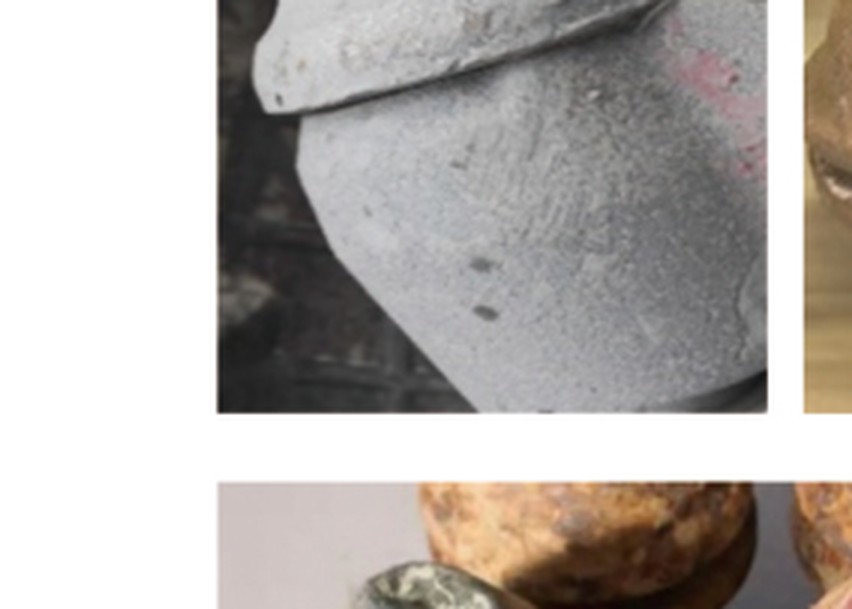
Rapid steel body wear on picks
Failure Mode 2

Rapid Body Wear

The steel body erodes faster than the carbide due to material properties.
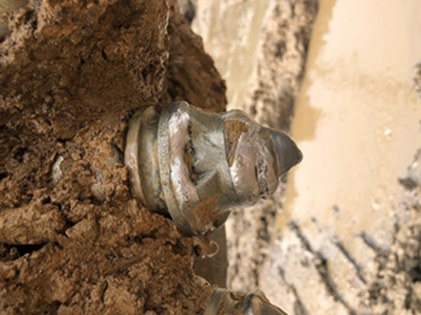
Body & carbide wear out of sync
Fractured carbide tip close-up
Failure Mode 3

Carbide Fracture

Unmatched ground conditions or excessive impact — main carbide, carbide strips or carbide buttons crack and chip.
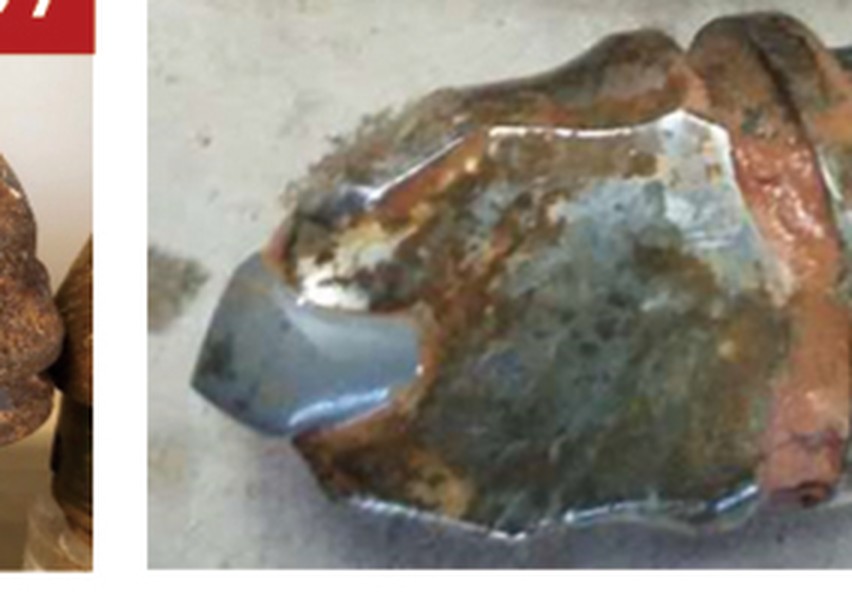
Carbide cracks under impact
Carbide tip lost from pick body
Failure Mode 4

Carbide Loss

Excessive impact or out-of-sync wear — the steel body can no longer carry the carbide, which drops out of the pick.
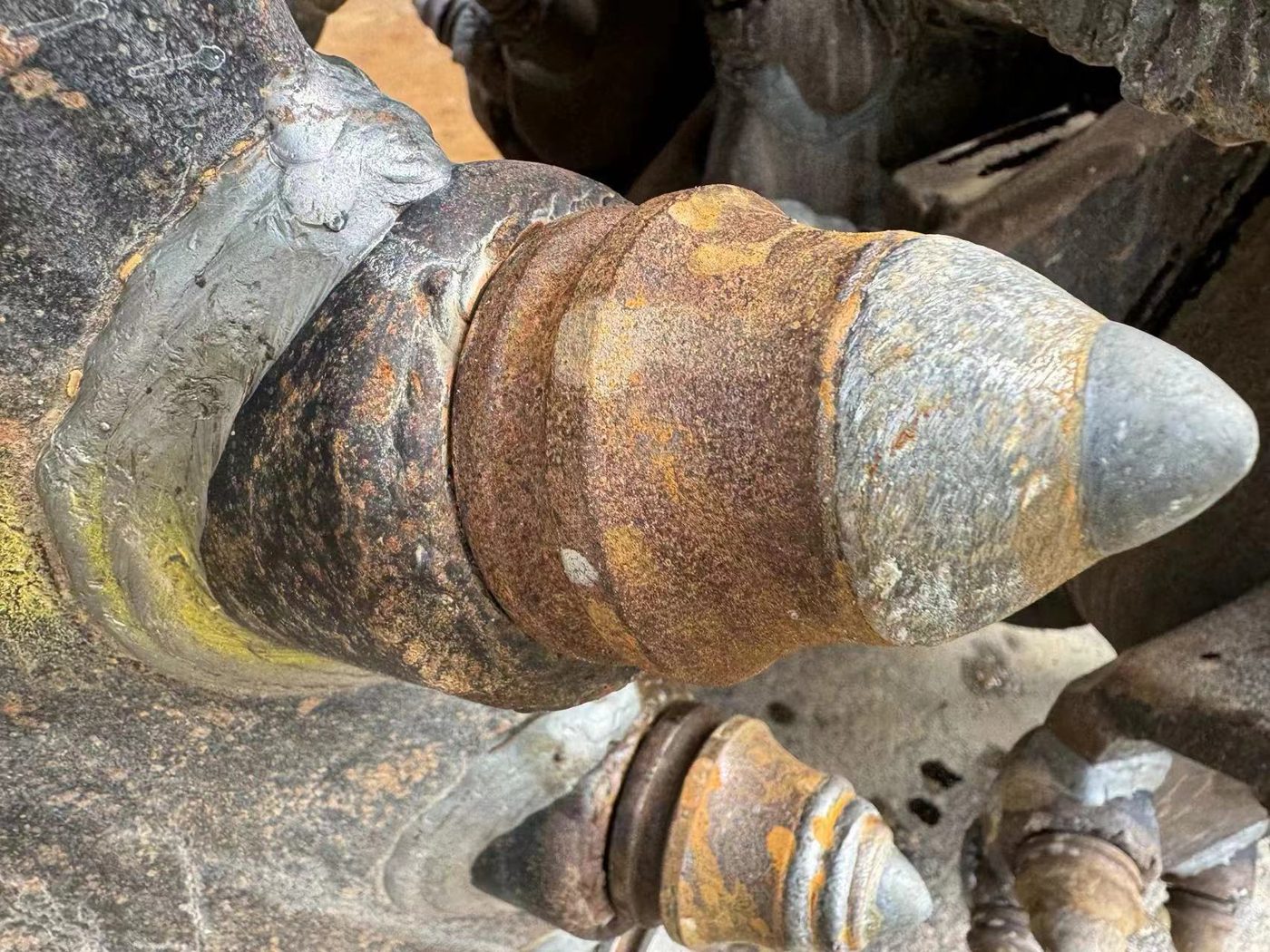
Carbide drops out of the body
Uneven one-sided pick wear
Failure Mode 5

Uneven Wear

Pick mounting angle out of line with the cutting tool angle — the pick stops rotating during cutting and wears on one side only.
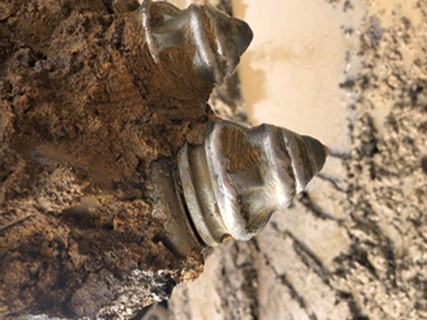
Pick stops rotating, wears on one side
Normal wear pick after full service life
Baseline

Normal Wear

Ground conditions matched, normal operation — the pick reaches its maximum service life.

Baseline · full service life

Full specification comparison.

Key data from our product brochure and field projects.

Performance Metric Traditional Picks PLASMA Alloy Ring Improvement
Alloy wear-layer thickness — 1–2 mm strips or 0 coating 5–8 mm alloy ring — 5–8 mm wear layer
Bonding method — Brazed / surface attached Deep metallurgical fusion — No interface to peel off
Coverage — Non-continuous, with gaps Continuous, full body — Continuous full-body coverage
Hardness profile — Single hardness, abrupt interface HRC 42–45 → 60–62 → 72–75 — Three-stage co-grinding
Toughness & impact — Chips / peels under impact High toughness — no chipping, no cracking — Excellent impact resistance
Changeout frequency — Frequent Significantly reduced — Less downtime, lower cost

Figures come from field projects; each compared against the picks previously used on the same rig.

Browse pick models → Get quoted →

Gradient hardness, three-stage co-grinding.

Alloy ring hardness and toughness are balanced in a controlled gradient: steel body, alloy ring and carbide wear in sync — forming a sharp conical face that lifts wear resistance and cutting efficiency.

Hardness Gradient — Three-Stage Co-Grinding

Carbide · Alloy Ring · Steel Body wear together, staying sharp

1 2 3 Tungsten Carbide HRC 72–75 Alloy Ring HRC 60–62 Steel Body HRC 42–45 Schematic cross-section — hardness by zone
1
Tungsten Carbide
Primary cutting edge — extreme abrasion and impact resistance
HRC 72–75
2
Alloy Ring
Fused deep into the body — a metallurgical bond between the carbide tip and the steel
HRC 60–62
3
Steel Body
Tough 42CrMo core (HRC 42–45) absorbs impact — no chipping, no cracking
HRC 42–45

In normal service the three materials wear in sync and form a sharp conical face — cutting efficiency stays high, and the pick wears fully to the end of its service life.

Project References

Field-proven on real projects.

Alloy ring picks running against standard cutters on the same ground — direct jobsite results.

Hydromill trenching field case, China
China — Hydromill Trenching
Soilmec SC-135 hydromill — efficiency up 30%, pick consumption down 25% vs premium domestic and imported picks
60–80 MPa Argillaceous siltstone
View models for this rig type →
Hydromill trenching field case, China
China — Hydromill Trenching
Casagrande hydromill — efficiency up 30%, pick consumption down 25% vs premium domestic and imported picks
80–120 MPa Slightly weathered granite
View models for this rig type →
Rotary drilling piling field case, China
China — Rotary Drilling Piling
SWDM420 rotary rig — efficiency up 35%, pick consumption down 20% vs conventional picks
~90 MPa Limestone, quartzite interbeds
View models for this rig type →

Field observations from customer job sites. Field comparison only — not laboratory test data. Full project data available on request.
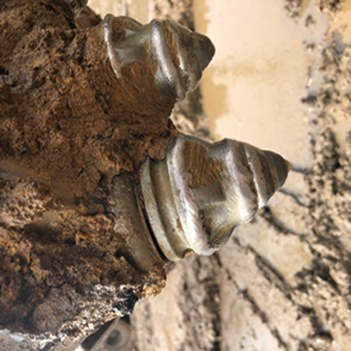
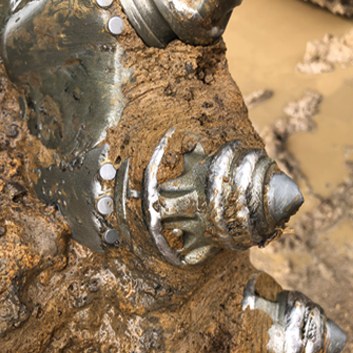
Normal-wear PLASMA pick after full service
After full service life — even, low wear on the PLASMA pick
PLASMA pick body stays sharp after service
Body stays sharp after service — wear stays in sync
PLASMA pick versus standard pick after service
PLASMA pick vs standard pick after the same service
Low-wear PLASMA pick after field service on site
Low wear after field service

Photos above show picks recovered from actual customer operations. Field comparison only — not laboratory test data.

Test PLASMA in your ground.

Send us your operating parameters — rock type, compressive strength, abrasiveness, machine model. Our team will recommend the right alloy ring spec and arrange a field trial. Fast team response.